Practical Info & Admission

Program Overview: MA of Arts in Fine Art & Design

  • Pathways: Visual Arts & Post-Contemporary Practice, Situated Design, Ecology Futures, Health by Design
  • Duration: 24 months (4 semesters)
  • Mode: Full-time
  • Credits: 120 ECTS
  • Degree: Master of Fine Art and Design
  • Institution: Avans University of Applied Sciences
  • Accreditation: Fully accredited by NVAO
Orientation Webinar: You can also register here for one of our webinars Orientation Webinar: You can also register here for one of our webinars

Program Overview: MA Animation

  • Duration: 12 months (5 periods across 2 semesters)
  • Mode: Full-time
  • Credits: 60 ECTS
  • Degree: Master of Animation
  • Institution: Avans University of Applied Sciences
  • Accreditation: Fully accredited by NVAO

Enroll in Studielink

To apply for the academic year 2026–2027, enroll via Studielink.

Application dates:
01-09-2026 to 31-08-2027

Steps:

  1. Apply for the MA Animation or the MA of Arts in Fine Art & Design
  2. After you have chosen for the MA of Arts in Fine Art & Design, you can specify your choice in:
    • Ecology Futures
    • Situated Design
    • Health by Design
    • Visual Arts & Post-Contemporary Practice.

There is no admission fee.


Studielink Studielink

Admission Requirements

To start the program in September 2026, you must hold a Bachelor degree before 1 September 2026.


Specifically for the MA Animation: A background in a visual field is preferable, and animation skills are required. These must be clearly demonstrated in your portfolio, motivation, and overall application. Applicants from other disciplines may still be eligible if their skills meet Master-level expectations.

Admission Assignments & Documents

After enrolling via Studielink, you will receive login credentials for your personal intake dashboard. You are required to upload all necessary documentation and your completed admission assignment through this portal.

Admission procedure

After enrolling in Studielink, you will receive login details for your intake dashboard. Here you must upload:

For both the MA Animation and the MA of Arts in Fine Art & Design

1.Questionnaire for Avans

2. Avans Masters of Arts – Questionnaire note

3. Curriculum Vitae (max. 1 A4)

Overview of your education and professional/artistic achievements.


Specific admission requirements:

4. Personal Statement (min. 1 A4)

MA Animation describe:

  • The formal, technical, thematic, and theoretical concerns in your practice
  • How you envision your practice developing during the Master
  • Why this program is suited to your goals
  • Your understanding of the Master Animation curriculum

MA of Arts in Fine Art & Design describe:
Your current practice—formal, technical, thematic, theoretical—and how it aligns with the Master program.


5. Practice Portfolio

MA Animation:
A practice portfolio should contain visual documentation of projects and practice development undertaken during the last 3 years and should provide a good impression of your design and storytelling skill set. Please also specify your role in a project you performed within a team. If you wish to submit a link to a website you may do so, in addition to submitting a portfolio. This can also be a link to your website (put your link on a PDF and upload the document)


MA of Arts in Fine Art & Design:
Visual documentation from the last 3 years (max. 25 images + optional video/sound). Include an image list (title, year, dimensions, duration). A website link in PDF is allowed.


6. Research Proposal (max. 2 A4)

MA Animation:
The Research Proposal should outline the research that you wish to develop in relation to the practice during the Masters program. We encourage you to reflect on your practice in relation to the wider field of animation practices and to cultural, theoretical, and historical contexts in contemporary society. Please reflect on a subject you find interesting, considering the following:

  1. Context: What is your research about? Why is it relevant?
  2. Admission: How does it relate to your current practice?

What do you want to develop further during the year?

  1. Framing: Try to formulate a preliminary research question.


MA of Arts in Fine Art & Design:
Outline your intended research inquiry and relate your practice to broader cultural, theoretical, and historical contexts.


General note| Use of Generative AI:
The MA Animation & MA in Arts in Fine Art & Design has strict policies on the use of generative AI. Any use of generative AI in submitted materials must be specified in the materials themselves. Please specify which AI tools were used and how they were applied in your work.

Selection Criteria

Selection Criteria

Assessment is based on the following Master-level competencies:

  1. Knowledge & Insight
    • Creative ability
    • Contextual awareness
  2. Application of Knowledge
    • Creative ability
    • Critical reflection
    • Innovation
    • Collaboration
  3. Forming Judgements
    • Creative ability
    • Critical reflection
  4. Communication Skills
    • Communicative ability
    • Organisational ability
  5. Ability to Learn
    • Critical reflection
    • Innovation

Admission Deadlines

DeadlineDescription
Sunday, 15 March1st application deadline
Tuesday, 31 March1st round of interviews
Friday, 1 May 

2nd deadline (last NON-EU deadline)

Tuesday, 19 May2nd round of interviews
Monday, 1 June3rd deadline (EU only)
Tuesday, 16 June3rd round of interviews

Important: Enrollment is only final when all required documents (diploma + translation, passport copy, English language test results) have been uploaded to the Avans Student Administration. You will receive a link after enrollment. For questions: studentenadministratie@avans.nl

Once your file is complete and you have been accepted to our Master programme, you will receive an official letter of acceptance.

Interview Procedure

After reviewing your documents, the admissions committee will decide whether a Teams interview is required.
A positive review leads to a Teams  interview assessing:

  • Study motivation
  • Research interests
  • Artistic/animation skills
  • Theoretical knowledge

A negative review means there will be no interview. Admission is not guaranteed solely based on the interview. Feedback and the final decision follow afterwards.

Language Requirements

You must be fluent in English (minimum IELTS 6.0, or equivalent).
A Bachelor program taught in English may also be accepted as proof.

You must be able to:

  • Understand and take notes during English-taught lectures
  • Read and use specialist literature
  • Understand professional terminology
  • Write at Master’s level

More info:
🔗 Language Requirements – Avans  English language requirements | Avans University of Applied Sciences
For questions: studentenadministratie@avans.nl

Accommodation

Student housing information
🔗 Avans Accommodation  Accommodation in ’s-Hertogenbosch | Avans University of Applied Sciences

Please note:

  • Register for housing early to improve your chances, so early application is advised.

Avans rooms are for individual students (not for partners).

Degree Accreditation

All Master programs at Avans are fully accredited by the NVAO (www.nvao.com).
For information about Dutch higher education and degree recognition:
🔗 Why NL? – Study in NL  Why NL? | Study in NL
Recognition in your home country:
🔗 ENIC-NARIC centers  www.enic-naric.net

Tuition Fees & Scholarships

Tuition fee information:
🔗 Tuition Fees – Avans  Tuition fees | Avans University of Applied Sciences
(Non-EER students must pay before 15 June 2026.)

Scholarships:
🔗 Scholarships – Avans Scholarships | Avans University of Applied Sciences

If you need any further information, please feel free to contact us.
We look forward to receiving your application!
Yegane Gholamianpour

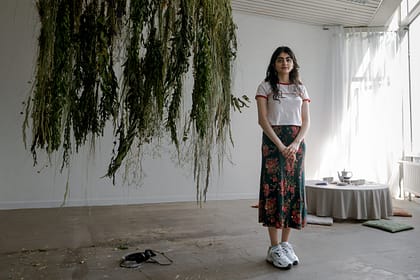
I was drawn to Situated Design because it challenges the conventional, market-oriented model of design education. Rather than focusing on commercial outcomes, the program emphasizes design as a tool for care and social transformation, allowing for a more contextual and impact-driven practice.

Alumni MA Situated Design 2024

Yen-Ling Chen

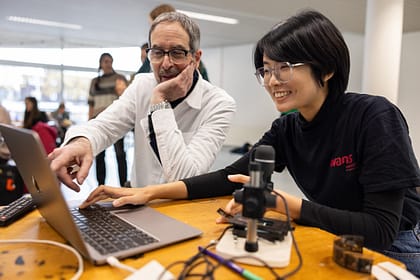
Participating in a workshop led by Steven Woloshen, Yen-Ling engaged in analog animation techniques. This practice-based research involved ‘direct-on-film’ animation, where students manipulate the physical film strip to explore the tactile relationship between the medium and the moving image.

Alumni, MA Animation 2025

Yegane Gholamianpour

I was drawn to Situated Design because it challenges the conventional, market-oriented model of design education. Rather than focusing on commercial outcomes, the program emphasizes design as a tool for care and social transformation, allowing for a more contextual and impact-driven practice.

Alumni MA Situated Design 2024

Yen-Ling Chen

Participating in a workshop led by Steven Woloshen, Yen-Ling engaged in analog animation techniques. This practice-based research involved ‘direct-on-film’ animation, where students manipulate the physical film strip to explore the tactile relationship between the medium and the moving image.

Alumni, MA Animation 2025

Yegane Gholamianpour

I was drawn to Situated Design because it challenges the conventional, market-oriented model of design education. Rather than focusing on commercial outcomes, the program emphasizes design as a tool for care and social transformation, allowing for a more contextual and impact-driven practice.

Alumni MA Situated Design 2024

Yen-Ling Chen

Participating in a workshop led by Steven Woloshen, Yen-Ling engaged in analog animation techniques. This practice-based research involved ‘direct-on-film’ animation, where students manipulate the physical film strip to explore the tactile relationship between the medium and the moving image.

Alumni, MA Animation 2025

Yegane Gholamianpour

I was drawn to Situated Design because it challenges the conventional, market-oriented model of design education. Rather than focusing on commercial outcomes, the program emphasizes design as a tool for care and social transformation, allowing for a more contextual and impact-driven practice.

Alumni MA Situated Design 2024

Yen-Ling Chen

Participating in a workshop led by Steven Woloshen, Yen-Ling engaged in analog animation techniques. This practice-based research involved ‘direct-on-film’ animation, where students manipulate the physical film strip to explore the tactile relationship between the medium and the moving image.

Alumni, MA Animation 2025

Yegane Gholamianpour

I was drawn to Situated Design because it challenges the conventional, market-oriented model of design education. Rather than focusing on commercial outcomes, the program emphasizes design as a tool for care and social transformation, allowing for a more contextual and impact-driven practice.

Alumni MA Situated Design 2024

Yen-Ling Chen

Participating in a workshop led by Steven Woloshen, Yen-Ling engaged in analog animation techniques. This practice-based research involved ‘direct-on-film’ animation, where students manipulate the physical film strip to explore the tactile relationship between the medium and the moving image.

Alumni, MA Animation 2025

Yegane Gholamianpour

I was drawn to Situated Design because it challenges the conventional, market-oriented model of design education. Rather than focusing on commercial outcomes, the program emphasizes design as a tool for care and social transformation, allowing for a more contextual and impact-driven practice.

Alumni MA Situated Design 2024

Yen-Ling Chen

Participating in a workshop led by Steven Woloshen, Yen-Ling engaged in analog animation techniques. This practice-based research involved ‘direct-on-film’ animation, where students manipulate the physical film strip to explore the tactile relationship between the medium and the moving image.

Alumni, MA Animation 2025

Yegane Gholamianpour

I was drawn to Situated Design because it challenges the conventional, market-oriented model of design education. Rather than focusing on commercial outcomes, the program emphasizes design as a tool for care and social transformation, allowing for a more contextual and impact-driven practice.

Alumni MA Situated Design 2024

Yen-Ling Chen

Participating in a workshop led by Steven Woloshen, Yen-Ling engaged in analog animation techniques. This practice-based research involved ‘direct-on-film’ animation, where students manipulate the physical film strip to explore the tactile relationship between the medium and the moving image.

Alumni, MA Animation 2025

Yegane Gholamianpour

I was drawn to Situated Design because it challenges the conventional, market-oriented model of design education. Rather than focusing on commercial outcomes, the program emphasizes design as a tool for care and social transformation, allowing for a more contextual and impact-driven practice.

Alumni MA Situated Design 2024

Yen-Ling Chen

Participating in a workshop led by Steven Woloshen, Yen-Ling engaged in analog animation techniques. This practice-based research involved ‘direct-on-film’ animation, where students manipulate the physical film strip to explore the tactile relationship between the medium and the moving image.

Alumni, MA Animation 2025

Yegane Gholamianpour

I was drawn to Situated Design because it challenges the conventional, market-oriented model of design education. Rather than focusing on commercial outcomes, the program emphasizes design as a tool for care and social transformation, allowing for a more contextual and impact-driven practice.

Alumni MA Situated Design 2024

Yen-Ling Chen

Participating in a workshop led by Steven Woloshen, Yen-Ling engaged in analog animation techniques. This practice-based research involved ‘direct-on-film’ animation, where students manipulate the physical film strip to explore the tactile relationship between the medium and the moving image.

Alumni, MA Animation 2025

Yegane Gholamianpour

I was drawn to Situated Design because it challenges the conventional, market-oriented model of design education. Rather than focusing on commercial outcomes, the program emphasizes design as a tool for care and social transformation, allowing for a more contextual and impact-driven practice.

Alumni MA Situated Design 2024

Yen-Ling Chen

Participating in a workshop led by Steven Woloshen, Yen-Ling engaged in analog animation techniques. This practice-based research involved ‘direct-on-film’ animation, where students manipulate the physical film strip to explore the tactile relationship between the medium and the moving image.

Alumni, MA Animation 2025

Yegane Gholamianpour

I was drawn to Situated Design because it challenges the conventional, market-oriented model of design education. Rather than focusing on commercial outcomes, the program emphasizes design as a tool for care and social transformation, allowing for a more contextual and impact-driven practice.

Alumni MA Situated Design 2024

Yen-Ling Chen

Participating in a workshop led by Steven Woloshen, Yen-Ling engaged in analog animation techniques. This practice-based research involved ‘direct-on-film’ animation, where students manipulate the physical film strip to explore the tactile relationship between the medium and the moving image.

Alumni, MA Animation 2025